Critical Maintenance Servers
Predictive Maintenance: Keeping Your Servers Online with AI
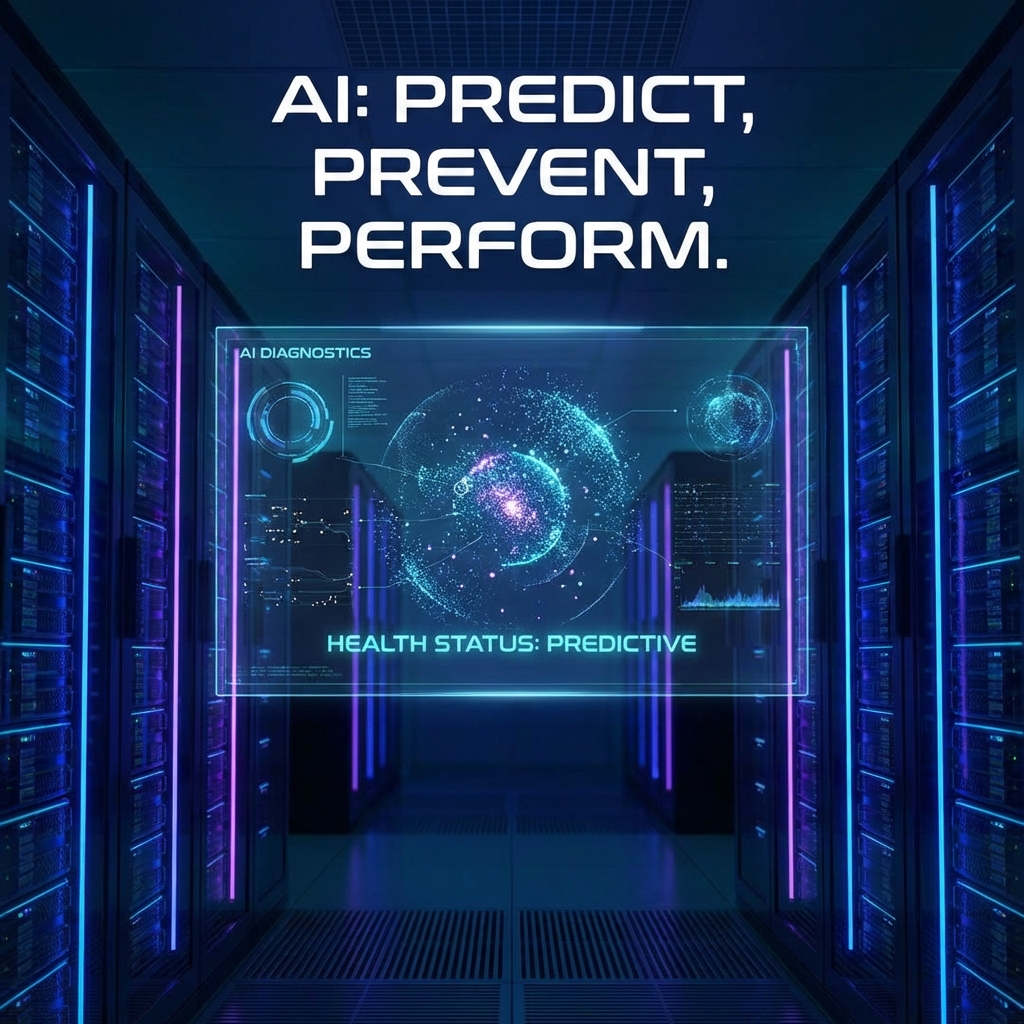
In the high-stakes world of IT infrastructure, downtime is more than just an inconvenience—it is a significant financial drain and a threat to brand reputation. Historically, server maintenance has operated on a reactive model: wait for a component to fail, suffer the consequences of an outage, and then scramble to repair or replace the hardware. However, as data centers grow in complexity and cloud reliance deepens, this "break-fix" approach is becoming unsustainable.
Enter the era of AI-powered predictive maintenance. By shifting from reactive to proactive strategies, organizations are now able to foresee hardware failures before they manifest as system outages. This article explores how artificial intelligence is transforming server management and how you can leverage these insights to guarantee 99.999% uptime.
The Evolution of Maintenance: From Reactive to Predictive
To understand the power of AI, we must first look at the traditional maintenance lifecycle. Reactive maintenance is inherently inefficient because it relies on post-mortem analysis. Scheduled (or preventive) maintenance is slightly better but suffers from the "Goldilocks problem": servicing hardware too often leads to wasted resources and unnecessary downtime, while servicing too infrequently leads to unexpected failure.
Predictive maintenance sits in the sweet spot. It utilizes machine learning algorithms to evaluate the "health" of a server in real-time. By processing massive telemetry datasets, AI creates a digital twin of your infrastructure, identifying microscopic performance drifts that signal an impending failure long before a human operator would notice a flicker in the dashboard.
How AI Analyzes Server Health
Modern predictive maintenance platforms do not rely on a single metric. Instead, they ingest a multi-dimensional stream of data points to build a comprehensive profile of your server’s operational state:
- Thermal Fluctuations: AI detects abnormal temperature spikes that could indicate fan failure or airflow obstruction.
- Performance Degradation: Monitoring CPU, RAM, and I/O latency to identify wear-and-tear on storage drives or compute nodes.
- Historical Pattern Recognition: Comparing current logs against petabytes of historical failure data to identify recurring stress signals.
- Power Consumption Patterns: Identifying electrical anomalies that often precede power supply unit (PSU) degradation.
The Role of Machine Learning Models
At the core of this technology are sophisticated machine learning models, such as anomaly detection algorithms and regression analysis. These models "learn" the unique baseline behavior of your specific environment. Because every server rack and datacenter configuration is unique, the AI adapts to your ecosystem, drastically reducing the "false positive" alerts that often plague standard monitoring tools.
Strategic Benefits of Proactive Maintenance
Implementing AI-driven maintenance is not just a technical upgrade; it is a strategic business move. The advantages ripple across the entire organization:
1. Minimizing Unplanned Downtime
By identifying a failing hard drive or an overheating memory module days before it crashes, IT teams can schedule replacements during low-traffic windows. This eliminates the "emergency fire-fighting" mode and maintains service continuity for end-users.
2. Extending Hardware Lifecycle
Proactive maintenance ensures that components are replaced only when truly necessary. This precision optimization allows IT departments to squeeze maximum value out of their hardware investment, delaying capital expenditures (CAPEX) without compromising reliability.
3. Optimizing IT Staff Productivity
When engineers spend less time troubleshooting catastrophic failures, they can focus on high-value projects like cloud migration, security enhancement, and infrastructure innovation. AI acts as a force multiplier for your existing IT talent.
Overcoming Challenges in Implementation
While the benefits are clear, transitioning to an AI-first maintenance model requires a thoughtful approach. Data quality is paramount; if your historical logs are incomplete or messy, the AI's predictive accuracy will be diminished. Organizations must invest in robust logging practices and ensure that data silos are integrated. Furthermore, human oversight remains essential. AI provides the insight, but the decision to act on a prediction—such as migrating workloads before a hardware swap—requires an expert human touch.
Conclusion: The Future of Infrastructure Resilience
The transition to AI-powered predictive maintenance is no longer a luxury for hyperscalers; it is a necessity for any business that relies on digital uptime to survive. By moving beyond the limitations of human observation and traditional threshold alerts, AI allows IT departments to act with foresight rather than panic.
The future of server management is autonomous, invisible, and remarkably reliable. By embracing predictive maintenance, you are not just fixing servers—you are building an resilient infrastructure capable of supporting the next generation of business growth. Are you ready to stop waiting for your servers to fail and start anticipating their needs? The tools are ready; the time to modernize your maintenance strategy is now.
- #AI
- #ServerMaintenance
- #PredictiveMaintenance
- #Uptime