AI Solutions
AI's Transformative Role in Personalized Healthcare
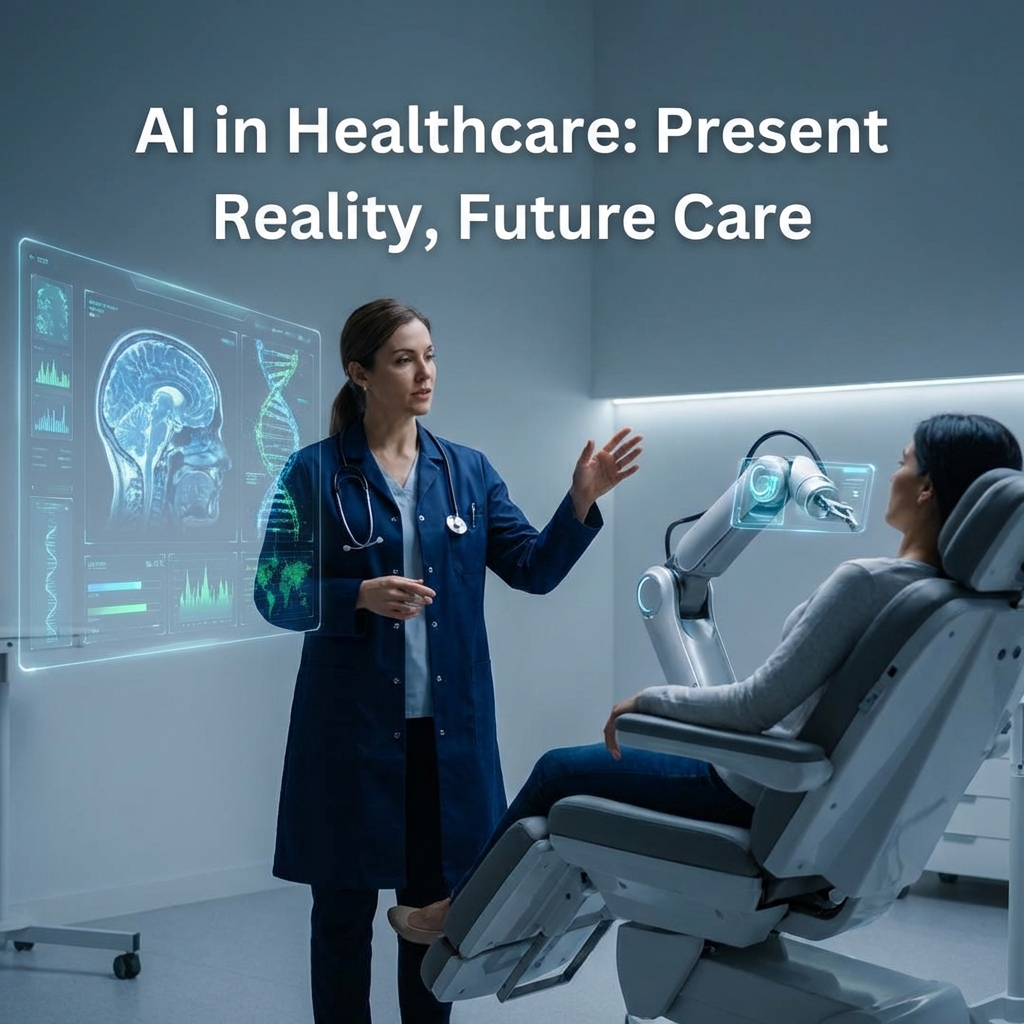
The AI Revolution: How Artificial Intelligence is Redefining Personalized Healthcare
The landscape of modern medicine is undergoing a seismic shift. For decades, healthcare has operated largely on a "one-size-fits-all" model—a reactive approach where standardized treatments are administered based on population averages. However, we are now entering the era of hyper-personalized medicine, a transformation driven primarily by the rapid evolution of Artificial Intelligence (AI).
By shifting the focus from general diagnostics to individualized care pathways, AI is not just enhancing efficiency; it is fundamentally altering patient outcomes. This article explores how AI-driven technologies are decoding the complexity of human biology to usher in a new age of precision, prevention, and improved wellness.
The Convergence of Big Data and Biological Insight
The core of personalized healthcare lies in the ability to process and synthesize vast, disparate datasets. Every patient is a complex entity defined by their unique genetic makeup, environmental exposures, lifestyle habits, and comprehensive medical history. Previously, the human brain—and even traditional software—could not reconcile these variables in real-time. AI changes this equation.
Advanced machine learning algorithms can now scan millions of data points, identifying subtle correlations that escape human clinicians. By integrating genomic sequencing with real-time data from wearable technology, AI can predict health risks long before symptoms manifest, allowing for proactive, preventative interventions rather than reactive treatment.
Key AI Technologies Driving the Shift
Several distinct pillars of AI are currently converging to revolutionize patient care:
- Machine Learning (ML): The backbone of predictive analytics. ML models analyze historical health data to predict which treatments will be most effective for a specific patient profile, minimizing trial-and-error prescribing.
- Natural Language Processing (NLP): Used to mine unstructured data from Electronic Health Records (EHRs), physician notes, and medical literature. This ensures that clinical decisions are based on the latest research and the patient’s complete narrative history.
- Computer Vision: AI-enhanced imaging is transforming radiology and pathology. Algorithms can now detect microscopic anomalies in X-rays, MRIs, and CT scans with accuracy levels that often surpass human specialists, leading to earlier cancer detection and more precise surgical planning.
Customizing Treatment Pathways
Personalized healthcare through AI is most visible in fields like oncology. Rather than applying a standard chemotherapy regimen, AI tools can analyze the specific mutations of a tumor to suggest a combination of immunotherapy or targeted drugs. This precision minimizes side effects, improves efficacy, and drastically increases the quality of life for the patient.
Ethical Considerations and Data Privacy
While the potential for AI in medicine is limitless, it is not without significant ethical hurdles. The integration of sensitive patient information into AI platforms raises critical concerns regarding data security, algorithmic bias, and the transparency of "black box" decision-making systems.
To ensure that the AI revolution benefits all, healthcare organizations must implement robust governance frameworks. Data must be anonymized and protected, and AI models must be regularly audited to ensure they do not perpetuate socioeconomic or racial biases inherent in historical medical data. Furthermore, maintaining the "human in the loop" is essential; AI should act as a sophisticated tool to assist physicians, not a replacement for the empathetic clinical judgment that defines the doctor-patient relationship.
The Road Ahead: A Future of Proactive Wellness
The future of healthcare is undeniably personalized, predictive, and participative. As AI technologies mature, the barrier between medical research and daily patient care will continue to dissolve. We are moving toward a world where your "digital twin"—a virtual model of your biological profile—can be tested against various treatments before you ever step into a hospital.
While we must navigate the challenges of implementation and ethics with caution, the trajectory is clear: Artificial Intelligence is empowering a healthcare system that treats the person, not just the symptom. By embracing these technological advancements, we are not just extending lifespans; we are improving the quality of the lives we live. The evolution of personalized medicine is no longer a futuristic dream—it is happening now.
- #AIHealthcare
- #PersonalizedMedicine
- #MachineLearning